80 seconds
Operation time removed
Reworking the fixtures, methods, and transfer process behind precision lidar assembly—from a single lens operation to an offshore production line.
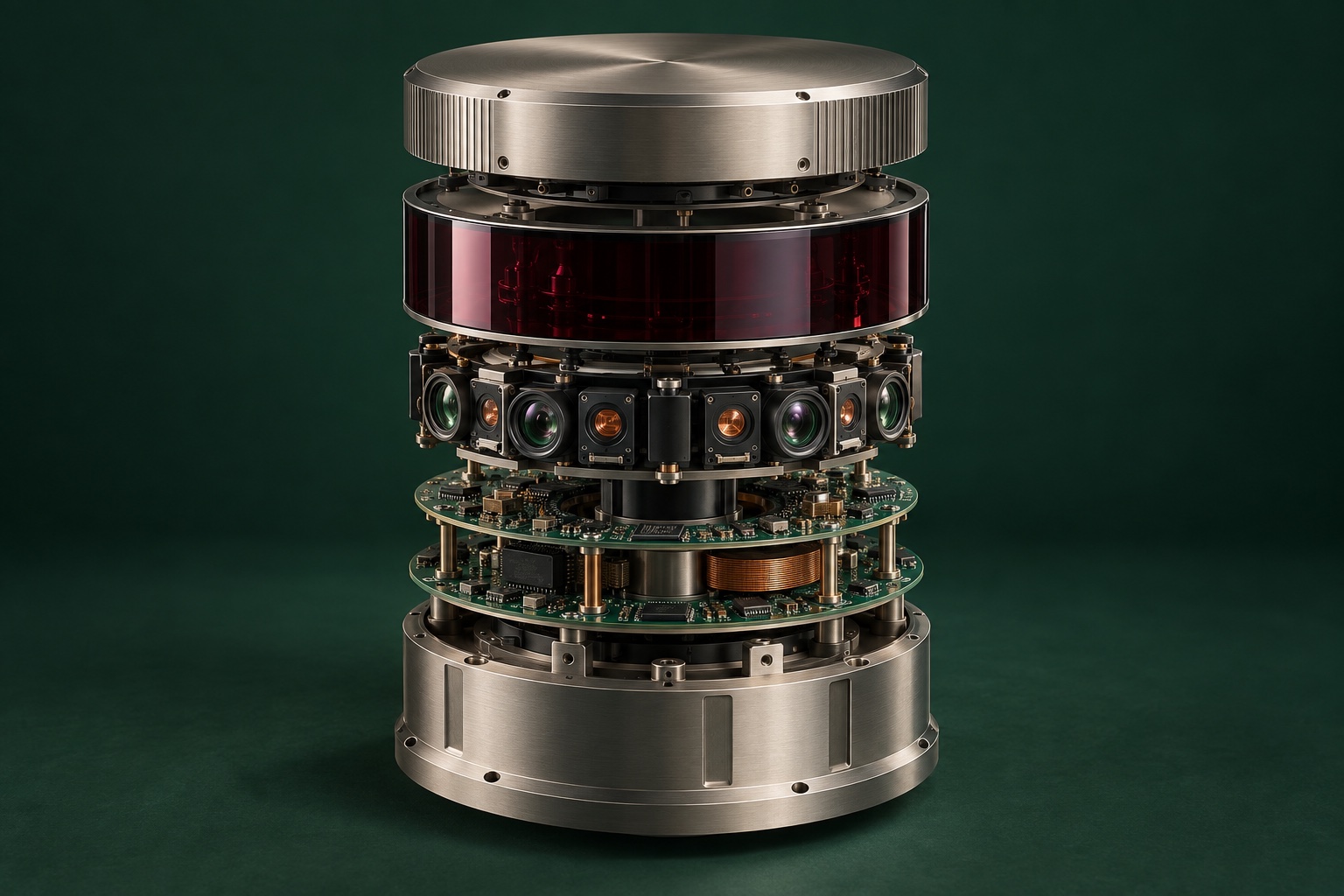
A lidar sensor combines optical, mechanical, and electronic subsystems. Small alignment errors upstream can appear as failures at final test. The manufacturing challenge was to make precise assembly repeatable while supporting new builds and a running production line.
I supported NPI with manufacturability feedback, assembly and alignment flows, fixtures, and procedures. The same methods then had to work across operators and at contract manufacturers.
The constraintThe D-Lens-to-PCBA attachment operation needed a faster, repeatable method that preserved optical alignment.
My responseReworked the fixturing and attachment method, removing 80 seconds per D-Lens-to-PCBA attach.
The scopeThis is an operation-time improvement. It does not establish the same percentage gain in total factory output.
The problemsEpoxy scrap and persistent QFN solder voiding required different interventions.
My responseConsolidated epoxies across the line, removing $40k of scrap per quarter. Moved affected QFN assemblies to vacuum reflow to resolve the solder-voiding issue.
The disciplineDiagnosed line and test failures, traced contributing causes, and drove corrective actions into the process.
The challengeA process must retain its precision when it moves to another factory.
My responseTransferred and ramped the VLS-128, VLP-32, and TROSA product lines to an overseas contract manufacturer without production interruption. Developed active-alignment lens and precision mirror attach processes on FiconTEC platforms, alongside fixtures and procedures for repeatable assembly.
The responsibilityScaled optical-bench component attachment while holding yield and output targets.
Explore cumulative operation time removed using the confirmed reduction of 80 seconds per D-Lens-to-PCBA attach. The attachment count is an illustrative input, not a claim about a particular sensor configuration.
Operation time removed
Across the selected attachment count
The process change removed 80 seconds per D-Lens-to-PCBA attach. Epoxy consolidation delivered a separate $40k quarterly scrap reduction.
The broader contribution was developing methods that could be repeated across operators and transferred to manufacturing partners—from NPI assembly feedback to active alignment and production troubleshooting.